Motorcycle Trip Packing Checklist for NY Roads
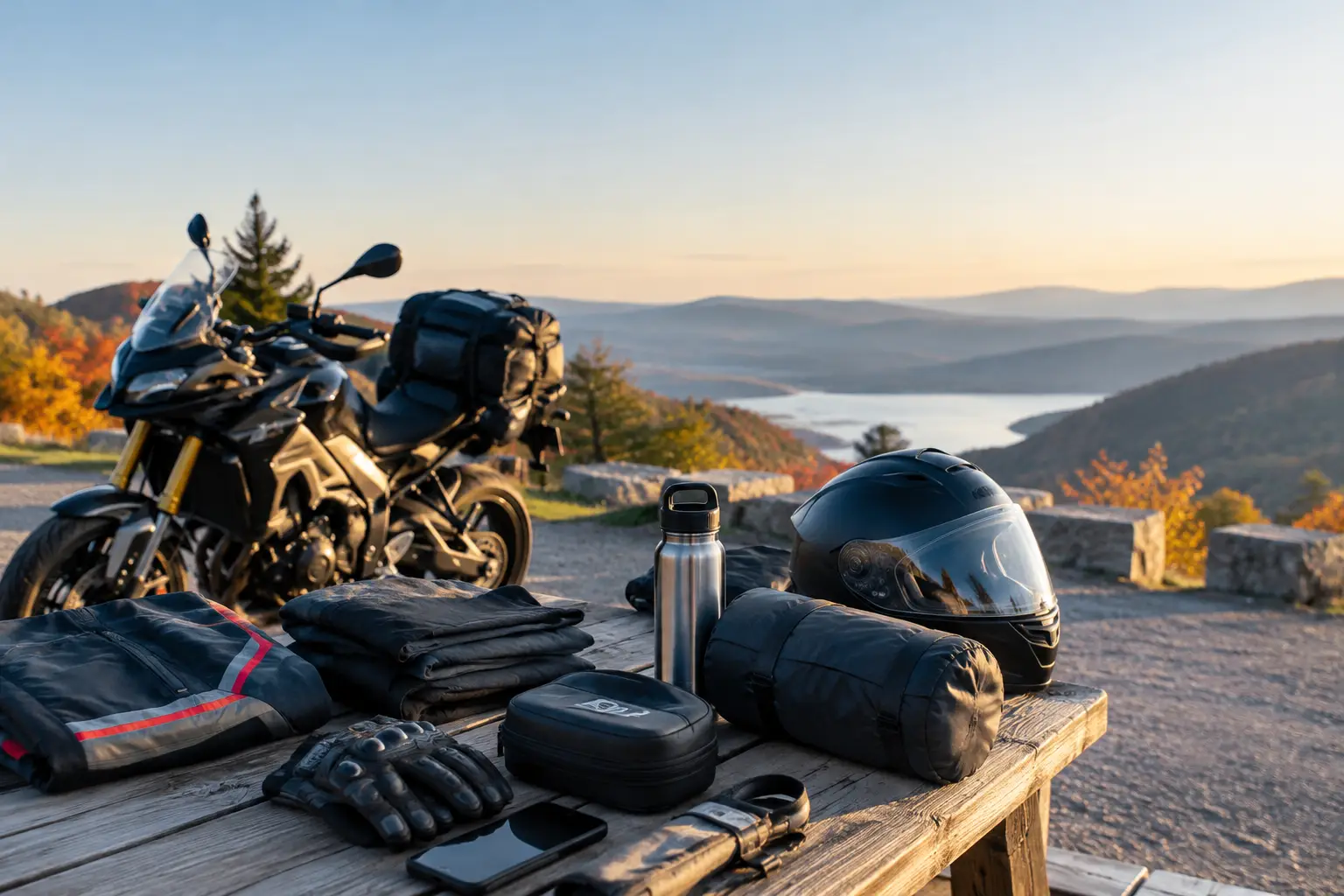
A good motorcycle trip packing checklist starts before a single bag is strapped down. On a ride through Upstate New York, one hour can bring sun, cold shade, road grit, and a hard rain shower. Pack for the miles you are actually riding, not the photo you hope to take at the overlook.
Whether you are rolling out for a two-night cabin reset, a group ride through the Catskills, or a longer run on forest-edge backroads, the goal is simple: carry what keeps you safe, dry, comfortable, and moving. Leave the kitchen sink at home.
Build Your Motorcycle Trip Packing Checklist Around the Ride Start with three questions: How many nights are you gone? What is the weather doing? How much storage does your bike have? A fully dressed touring bike can handle more than a cruiser with saddlebags, while an adventure bike may have room for gear but still needs careful weight distribution.
For a weekend ride, pack light enough that you can find what you need without unpacking half the bike at every stop. For a multi-day route, add only items that earn their space. A spare pair of jeans may be useful at the cabin. A third pair probably is not.
Keep heavy items low and as close to the motorcycle's centerline as possible. Put frequently needed gear where you can reach it quickly, such as a top case or the outer pocket of a secured tail bag. Check every strap before leaving and again after the first 20 to 30 miles. Loose luggage can shift into a wheel, chain, exhaust, or passenger space fast.
Riding Gear Comes First The ride is only fun if you arrive ready to enjoy it. Your personal riding gear is not the place to gamble on the forecast.
Bring a DOT-approved helmet, eye protection, riding jacket, riding pants or durable abrasion-resistant pants, gloves, and over-the-ankle boots. Mesh gear can be comfortable in summer, but mountain roads cool down quickly in the morning and after sunset. A removable thermal layer or lightweight midlayer gives you options without taking up much room.
For Northeast weather, waterproofing matters as much as warmth. Pack rain gear even when the forecast looks clean. A compact rain suit, waterproof glove covers, and a dry pair of socks can turn a wet afternoon from miserable into manageable. If your boots are not waterproof, carry plastic bags or lightweight waterproof overshoes for an emergency layer.
A neck gaiter is one of the smallest, most useful additions to your kit. It helps with wind, dust, cool temperatures, and unexpected drizzle. In warm conditions, a cooling towel or hydration vest may make more sense. It depends on the season and the type of riding you plan to do.
Keep these items on your person or in easy reach * License, motorcycle endorsement, rental paperwork if applicable, insurance information, and emergency contact details * Phone, charging cable, portable battery, and downloaded offline maps * Wallet, keys, sunglasses, earplugs, and a small amount of cash * Water, snacks, sunscreen, and any necessary medications * Rain layer, extra gloves, and a warm layer for changing conditions
Do not bury your identification, phone, or rain gear under your overnight bag. When skies open up on a rural road, you will want those items in seconds, not after a parking-lot excavation.
Pack a Small Roadside Kit, Not a Mobile Garage You do not need to carry every tool in your home shop. You do need enough equipment to handle small problems and wait safely for help if the issue is bigger than a roadside fix.
Your kit should match the bike. Check the owner's manual or rental orientation for the recommended tire pressure, fuel type, and any model-specific notes. If you are renting a premium touring, cruiser, or adventure motorcycle, do not assume every compartment opens the same way or every bike uses the same tire setup.
A practical roadside kit includes a compact tire pressure gauge, tire repair kit suited to tubeless tires, small air compressor or CO2 inflator, multitool, zip ties, electrical tape, nitrile gloves, microfiber rag, and a basic first-aid kit. Add a flashlight or headlamp, especially if you may return after dark. A small roll of duct tape can solve more temporary problems than it has any right to.
Know the line between being prepared and getting stranded while attempting a repair beyond your skill level. A flat tire on a safe shoulder is one thing. A damaged wheel, leaking fluid, or electrical fault is another. Pull over in a visible location, get out of traffic, and contact roadside assistance or the rental provider when needed.
Clothes for the Cabin and the Trailhead Off the bike, comfort wins. Pack one casual outfit per day only if you truly need it. For most weekend cabin trips, two changes of clothes, sleepwear, and a clean shirt for the ride home are plenty.
Choose fabrics that dry quickly and layer well. A flannel, fleece, or light insulated jacket is more useful than a bulky coat for most shoulder-season stays. Bring sturdy shoes or hiking boots if you plan to walk uneven ground, explore nearby state forest areas, or spend time outside after a rain.
Your off-bike bag can include toiletries, a reusable water bottle, insect repellent, sunscreen, and a small daypack. If you plan to cook, check what is provided at your lodging before packing groceries, coolers, or specialty gear. Space on a motorcycle is valuable, and duplicate items are dead weight.
For a cabin-based stay like ODBP Adventures, think in terms of one organized home base. Arrive with your riding essentials, settle in, and use the cabin as your reset point between routes rather than hauling everything along on every mile.
Adjust the Checklist for New York Conditions New York riding rewards preparation. Rural fuel stops can be farther apart than expected, cellular service can be inconsistent, and shaded roads may stay damp long after the rest of the pavement dries. Fill up earlier than you think you need to, especially before heading into less populated areas.
During spring and fall, add a warmer base layer and watch for leaves, gravel, and cold pavement. In summer, prioritize hydration and sun protection, but still carry rain gear. In hunting season, wear visible colors when you are walking outside established roads or exploring permitted public areas. Respect posted signs, private-property boundaries, seasonal closures, and all New York State forest regulations.
If your plans include dirt or gravel roads, confirm that the route is legal, suitable for your motorcycle, and within your ability level. A large touring bike can cover well-maintained gravel carefully, but it is not an adventure bike. Likewise, a capable adventure bike does not make every trail open to motorized use.
Do a Five-Minute Pre-Ride Check Packing is finished only after the motorcycle is ready. Before each day's ride, walk around the bike. Check tire condition and pressure, lights, fuel level, luggage straps, mirrors, and visible fluid leaks. Make sure nothing is resting against a hot exhaust or hanging near moving parts.
Then put on your gear, set your route, tell someone where you expect to be, and ride your own pace. Group rides work best when everyone agrees on fuel stops, hand signals, and what happens if someone gets separated.
The best packing job is the one you forget about once the road starts to bend. Travel light, secure every load, leave room for changing weather, and let the mountain roads do the rest.