Harley Versus Indian Touring: Which Fits?
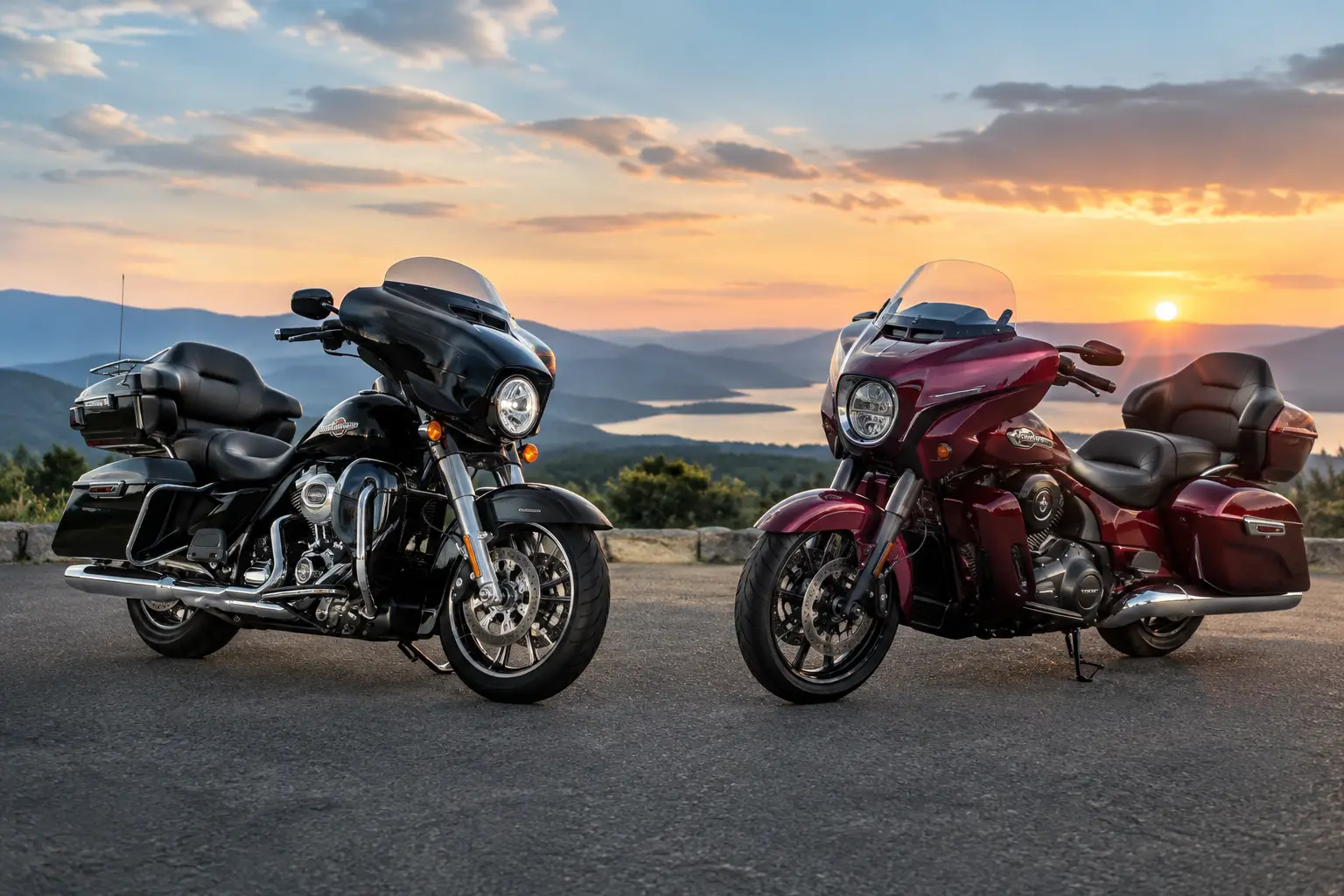
The right touring bike reveals itself somewhere after the gas station and before the next overlook. On a long run through the Catskills, with a passenger, rain gear, and a weekend bag in the back, Harley versus Indian touring is less about a badge and more about how the motorcycle carries you through the miles.
Both brands build serious American V-twin touring machines. Both can turn a cabin weekend into a full road-trip story. The real choice comes down to the riding feel you want, the technology you value, the way you pack, and whether your favorite roads are wide-open highways, rolling backroads, or a little of both.
Harley versus Indian touring: the big difference Harley-Davidson touring motorcycles tend to deliver the familiar big-twin experience many riders grew up wanting: a deep pulse at idle, a broad riding position, and a substantial, planted feel on the highway. They have a long history behind them, a massive rider community, and an ownership culture built around making the bike your own.
Indian touring models bring their own version of American long-haul muscle. Many riders are drawn to their distinctive styling, strong low-end pull, and feature-rich approach. Indian often appeals to riders who want classic lines without giving up modern convenience.
Neither is automatically better. A Harley may feel like the natural pick for someone who wants the traditional touring experience and plans to customize over time. An Indian may make more sense for a rider who wants a factory-equipped machine with a different character from the usual pack at the roadside diner.
The best answer is the one that makes you want to take the long way back to the cabin.
Road feel: how each bike speaks to the rider Touring motorcycles are heavy by design. That weight becomes an advantage once the road opens up, helping the bike stay composed around passing trucks, in crosswinds, and through long sweepers. At parking-lot speed, though, the same weight asks for confidence, good footing, and smooth control.
Harley touring bikes are often described as settled and familiar. The controls, seating position, and engine response can feel intuitive to riders who have spent time on other Harley models. Their V-twins offer usable torque where touring riders need it most: pulling away from a stop, climbing a grade with a loaded trunk, or rolling on to pass slower traffic.
Indian touring bikes typically feel equally substantial but can offer a different personality through their engine tuning, chassis setup, and standard features. Some riders prefer the way an Indian gathers speed and tracks through a corner. Others simply like the visual statement of the front end, the tank, and the overall silhouette.
This is why a short test ride around the block rarely settles the question. Spend enough time to work the clutch in traffic, make a few tight turns, sit at highway speed, and feel the wind management. A bike that impresses for ten minutes can feel different after three hours.
Highway miles and mountain roads For interstate travel, both brands have the tools for the job: fairings, wind protection, cruise control on many models, lockable luggage, and enough engine to carry two people without feeling strained. Comfort depends heavily on the specific model and setup, especially windshield height, seat shape, handlebar reach, and suspension adjustment.
On Northeast backroads, the difference becomes more personal. A touring bike does not need to be a canyon carver to be rewarding, but it should feel predictable through uneven pavement, changing elevation, and tight small-town turns. If you prefer an easy, unhurried rhythm, choose the bike that feels calm when the road gets rough. If you like a more engaged feel, pay attention to steering response, braking feedback, and how naturally the controls fall to hand.
Comfort matters more than spec-sheet bragging rights A touring motorcycle can have impressive horsepower and still be the wrong bike if the seat puts pressure in the wrong place or the bars force you to reach. For a day ride, you can tolerate a compromise. For a two- or three-day escape, your body keeps score.
Start with the rider triangle: seat, floorboards or pegs, and handlebars. Can you place both feet securely at a stop? Do your knees have room? Are your wrists neutral? Can you stand up slightly over rough pavement without feeling trapped behind the controls?
Passenger comfort deserves the same attention. If you ride two-up, look at the passenger seat width, backrest, floorboard placement, grab handles, and available luggage space. A comfortable passenger is more likely to say yes when you suggest one more scenic loop before dinner.
Wind protection is another major divider. A tall fairing and windshield can make highway riding far less tiring, but too much buffeting around the helmet can ruin an otherwise great setup. Height, helmet style, and riding posture all affect the result. There is no universal winner here. A windshield that works perfectly for one rider may be noisy for another.
Tech, luggage, and the details that shape a trip Modern touring riders expect more than an engine and two saddlebags. Navigation, audio, phone connectivity, heated grips, tire-pressure monitoring, and rider-assist features can make a meaningful difference when weather shifts or the route changes. Indian and Harley both offer technology-forward touring options, but the available equipment varies by model year and trim.
Do not choose solely by the longest feature list. Ask whether you will use it. A built-in navigation screen can be valuable when you want your phone out of the weather. Heated grips matter on a cold morning in the mountains. Premium audio may be great on a long highway stretch, though plenty of riders would rather hear the motor and the road.
Luggage is where touring motorcycles earn their keep. Hard saddlebags keep gear protected and organized. A trunk adds real capacity for a passenger, jackets, groceries, or an overnight bag. Before you ride, make sure you know how the bags open, lock, and latch. Pack the heavy items low and secure loose gear so it does not shift through corners.
For a cabin-based trip, you do not need to carry everything you own. Bring layers, rain protection, gloves, a basic personal kit, and what you need for the day. Leave the extra bags at your home base and ride lighter when you head out to explore.
Choose based on your kind of escape Choose a Harley touring motorcycle if the heritage, sound, and familiar American touring feel are central to why you ride. It is also a strong choice for riders who enjoy the depth of the Harley community and want broad access to accessories, service familiarity, and personalization options.
Choose an Indian touring motorcycle if you want a distinct take on the big American V-twin platform, appreciate its design language, or prefer the features and ergonomics offered on a particular model. Indian is not a substitute Harley. It is its own experience, and that is the point.
For newer touring riders, the better question may not be Harley or Indian. It may be: can I comfortably manage this motorcycle at a stop, on a sloped driveway, and in a gravel parking area? A big touring bike rewards smooth, deliberate riding. It also demands respect. Wear proper gear, know the motorcycle before heading out, and avoid routes that exceed your skill level or the rental agreement.
If your route includes state forest country, stay on legal roads and permitted access areas. Respect posted signs, private-property boundaries, seasonal closures, and New York State hunting regulations. The best rides leave the roads, trails, and communities in good shape for the next group of riders.
Make the decision with a real route in mind Picture your actual weekend, not an ad campaign. Are you riding solo with a duffel bag, or carrying a passenger and enough layers for a changing forecast? Will you spend most of the day cruising scenic pavement, or make frequent stops at overlooks, small towns, and trailheads? Do you want the old-school pulse of a Harley or the distinct road presence of an Indian?
At ODBP Adventures, that choice is part of the experience. Start with the kind of ride you want, then choose the machine that fits your confidence, your gear, and your plans. Stay. Ride. Explore. Unplug.
The best touring bike is not the one that wins every argument online. It is the one that feels right when the pavement narrows, the trees close in, and you decide the day is still too good to head back just yet.