Cruiser Versus Adventure Motorcycle: Which Fits?
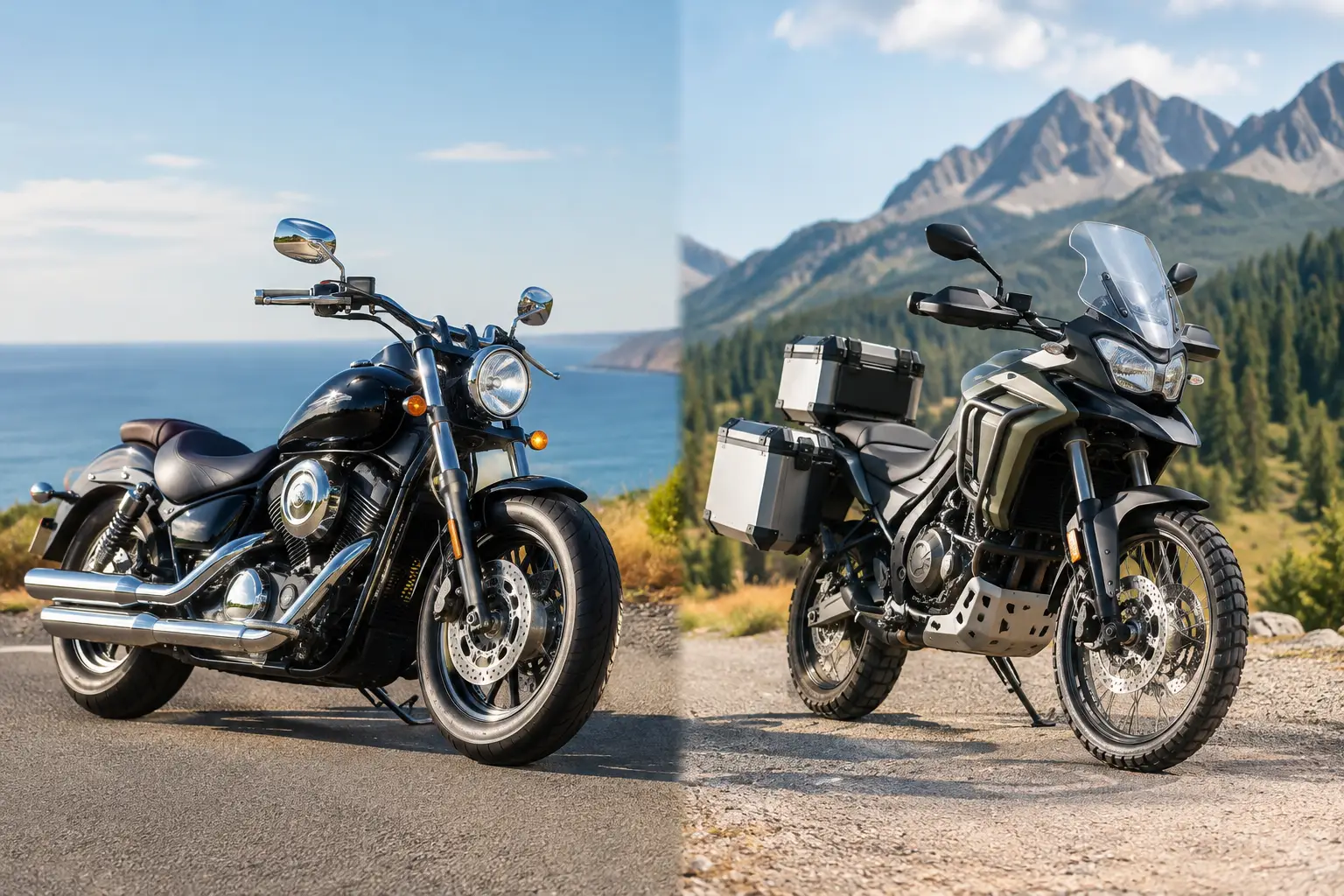
A mountain weekend can look very different depending on what is parked outside the cabin. In a cruiser versus adventure motorcycle decision, the right answer is not about which bike is tougher or more impressive. It is about how you want to spend your riding hours: rolling through small towns and scenic pavement, or continuing when the route turns rough, remote, and unpaved.
Around Masonville and the greater Catskills region, both choices make sense. The roads reward an unhurried cruise, but the surrounding forest country also invites riders to look beyond the yellow lines. Choose your ride based on the trip you actually plan to take, not the trip you think you ought to take.
Cruiser Versus Adventure Motorcycle: The Real Difference A cruiser is built around low-seat confidence, relaxed power delivery, and a laid-back road feel. Think broad handlebars, a planted stance, and the satisfying pull of a V-twin as you roll out of a curve. Many riders choose a cruiser because it makes a paved-road day feel like the destination itself.
An adventure motorcycle, often called an ADV bike, is designed to cover more types of terrain. It usually sits taller, has longer-travel suspension, more ground clearance, and an upright riding position. It can still cover highway miles, but its advantage shows up when pavement gets broken, shoulders turn to gravel, or a mapped route leads toward a legal forest road.
Neither category is automatically better for Upstate New York. A cruiser can be the better machine for a couple planning a long scenic loop, lunch in a river town, and a return to the cabin before dark. An adventure bike can be the better choice for an experienced rider who wants to combine pavement with permitted gravel roads and changing surface conditions.
Choose a Cruiser for the Road, the Rhythm, and the Ride Cruisers are at home on the kind of roads that make you slow down on purpose. Picture smooth county pavement, ridgelines, farm country, roadside diners, and quiet pull-offs where the only sound is the engine cooling down. A Harley-Davidson or Indian-style cruiser delivers that classic American road-trip experience in a way few other machines can.
The low seat is a major practical benefit. Riders with shorter inseams, those returning to motorcycles after time away, and anyone who values easy stops on uneven pavement often feel more comfortable when they can put their feet down with confidence. The lower center of gravity also makes low-speed parking-lot maneuvers and gas-station stops less intimidating.
Cruisers also make sense when your route is mostly paved and your plans are simple. You can pack a light overnight bag, wear proper gear, and spend the day enjoying the scenery rather than scanning every mile for ruts and loose stone. If your idea of getting Off Da Beaten Path means avoiding interstates and finding back roads, a cruiser may be exactly what you need.
There are trade-offs. A cruiser’s lower clearance and firmer rear suspension are not made for deep potholes, washboard gravel, or rocky roads. Even a short unpaved stretch can become uncomfortable or risky if the surface is loose. A heavy cruiser also asks more of the rider when a road turns steep, narrow, or uneven.
That does not mean cruisers cannot handle an occasional well-packed gravel driveway or maintained lane. It means the rider should be realistic. Keep the route pavement-focused, leave extra braking distance on dirty road surfaces, and turn around when conditions no longer match the bike.
Choose an Adventure Motorcycle for More Route Options An adventure motorcycle earns its name when the route refuses to stay predictable. Its suspension absorbs rough pavement better, its upright position gives the rider a clearer view ahead, and its ground clearance reduces the worry of scraping hard parts on uneven roads. Those features can make a long day more comfortable even when you never leave pavement.
For Northeast riding, that versatility matters. Frost heaves, patched pavement, surprise construction zones, gravel pull-offs, and weather-worn county roads are part of the landscape. An ADV bike is built to handle those imperfect moments without making the rider feel like every bump is a problem.
It also gives qualified riders more freedom to explore legal, suitable unpaved routes. A road that feels like a hard stop on a cruiser may be a reasonable option on an adventure bike, provided the surface, weather, rider skill, and local rules all line up. That last part matters. A capable motorcycle does not make every trail or forest road open for motorized use.
Before heading into New York State Forest areas, check posted signs, permitted uses, seasonal closures, and NYSDEC guidance. Respect private-property boundaries, hunting seasons, and gate closures. Stay on roads where motor vehicles are allowed, avoid mud-sensitive conditions, and never assume a track on a map is a legal route. Good riding protects access for everyone.
Adventure bikes have their own compromises. Their taller seat height can be a deal-breaker for riders who do not feel secure at a stop. They can feel top-heavy at walking speed, especially with luggage. Wind protection and luggage capacity are often strong, but the riding experience is more upright and purposeful than the low, relaxed feel many people want from a cruiser.
Comfort Depends on Your Body and Your Day Do not choose by category alone. The motorcycle that feels right after five minutes in a driveway can feel very different after three hours of riding. Cruiser riders may appreciate the low seat and easy reach to the ground, but some will want to pay attention to knee bend, handlebar reach, and lower-back support. Adventure riders may love the open hip angle and ability to stand on the pegs, yet find the tall saddle tiring during repeated stops.
Your passenger changes the equation, too. If the trip is built around two-up pavement riding, a cruiser or touring-oriented motorcycle with a supportive passenger seat may be the stronger fit. If the passenger is not comfortable with gravel or variable surfaces, there is no prize for choosing a route that makes the day stressful.
Weather deserves a vote as well. Cool mornings, rain, and fast-changing mountain conditions favor gear that keeps you dry and visible, regardless of bike type. Adventure motorcycles often offer better wind coverage, while cruisers with a windshield and proper layers can be equally comfortable for a scenic day. Check the forecast, but prepare for the road you may get instead of the forecast you hope holds.
Match the Bike to Your Cabin Itinerary A cruiser is a natural match for a relaxed two- or three-day escape. Arrive, settle into the cabin, and spend the next morning tracing paved roads through the hills. Stop for coffee, take the long way back, and keep enough daylight for a fire, dinner, or a quiet walk around the property. It is a ride-first weekend with plenty of room to unplug.
An adventure motorcycle fits a more flexible plan. You might start on pavement, explore approved forest access roads where conditions allow, and use the bike’s range and suspension to reach viewpoints or remote corners of the region. The goal is not to ride recklessly or chase the roughest surface. It is to have more options when the road gets interesting.
For guests who want the full stay-and-ride setup, ODBP Adventures makes it easier to build a trip around the kind of motorcycle experience you want. Still, pick the machine honestly. A premium motorcycle is most fun when it suits your confidence level, your passenger, your planned route, and the way you like to travel.
Ask These Questions Before You Reserve Start with where you want to ride. If the answer is scenic pavement, small towns, overlooks, and relaxed cruising, lean cruiser. If the answer includes maintained gravel, rougher roads, and a willingness to adapt your route to conditions, an adventure motorcycle may be the better call.
Then consider your recent riding experience. Have you handled a tall, heavier motorcycle at slow speed? Are you comfortable standing on the pegs, braking on loose surfaces, and reading changing terrain? If not, choose the bike that builds confidence rather than challenges it. A good trip leaves you wanting another mile, not wishing you had turned around sooner.
Finally, think about what you want to remember. Some riders remember the deep rumble and the long sweep of a paved mountain curve. Others remember finding a quiet legal forest road, dust on their boots, and no traffic in sight. Both are real versions of adventure.
Stay. Ride. Explore. Unplug. The best motorcycle is the one that lets you do all four with a clear head, the right gear, and enough time to enjoy the road home.